Navy Intel Analyst BZV decodes the 2026 Tehran Massacre. From 1950s oil logistics to the 3,428 dead, see why "Strategic Ambiguity" is a deadly miscalculation.
Part 6 — Iran: A Massacre Derived from Theocracy and Authoritarian Power
Executive Summary (BLUF): Iran in 2026 is a pressure cooker that has finally blown. While the country was secular in the 1970s, the 1979 Revolution installed an authoritarian theocracy that has now turned its full military weight against its own citizens. As of mid-January, thousands of Iranians have been murdered by a regime desperate to maintain power. The Trump administration’s promise of "protection" acted as the catalyst, but as the regime retaliated, the U.S. response shifted into "Strategic Ambiguity." Now, with the USS Abraham Lincoln entering the theater and U.S. assets stretched thin by the "Caribbean expansion," we are witnessing a global miscalculation of exponential proportions.
Don't Ever Confuse the Citizens for the Regime
A regime is not synonymous with the will of its people. An authoritarian is only as powerful as the "disposable useful fools" willing to follow orders for a shred of power. This is a tale as old as time: insanity becomes normalized not out of loyalty, but because the punishment for dissent is omnipresent. Under international law, this is a Crime Against Humanity, even if the world chooses to look away.
Iran was a very different country until the Shah was ousted in the 1979 Islamic Revolution. This movement was headed by Shia fundamentalists who installed a "Supreme Leader" (Ayatollah) claiming direct lineage to the Prophet Muhammad — who died in 632 AD without leaving a male heir. That 1,400-year-old succession crisis is what fuels the split between the Shia and the Sunni (who believe the leader should be the most devout/capable, not just a bloodline).
The regime has long weaponized this faith, sponsoring Violent Extremist Organizations (VEOs) like Hamas, the Houthis, Hezbollah, and the Badr Organization. Of course, Sunni extremists have their own versions: ISIS, Al-Qaeda, and Boko Haram. The problem with weaponizing religion is that the faith-soldiers feel "divinely mandated" to enforce their interpretation through blood.
The Pahlavi Paradox
Before 1979, particularly under Mohammad Reza Shah, Iran was a hybrid-secular society. There was "Westernization," suffrage for women, and restricted clerical influence. But make no mistake: the Shahs were autocrats. They used the SAVAK (secret police) to suppress dissent and turned parliaments into rubber stamps. Every revolution starts when the regime in charge gets "drunk on power."
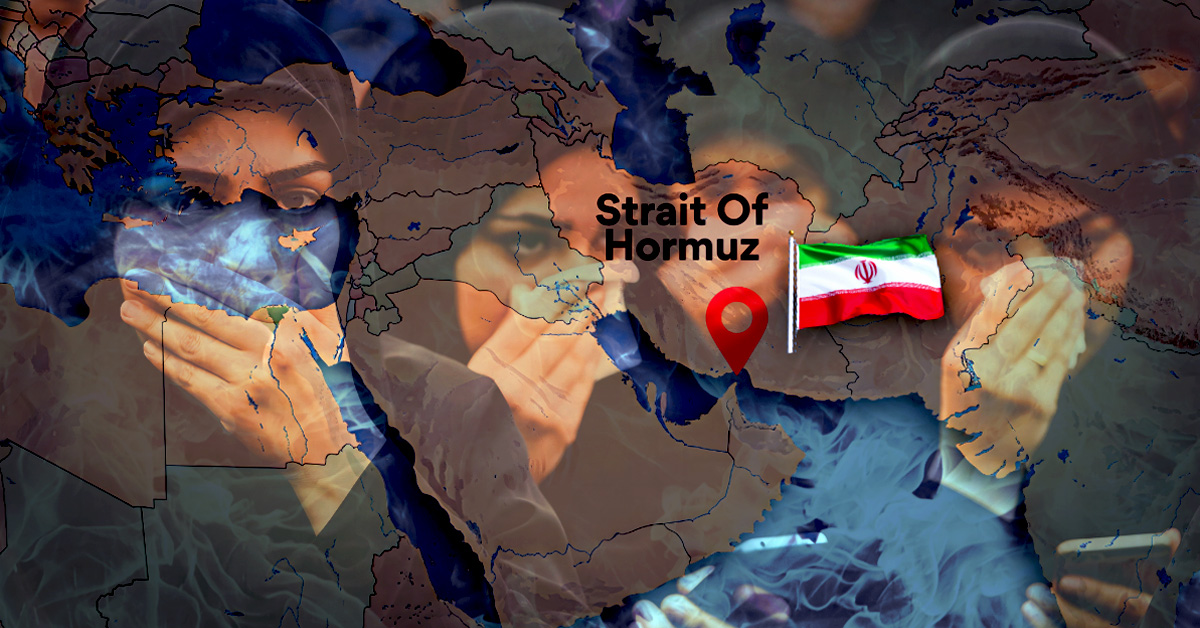
In 1979, the pendulum swung from one extreme to the other. The new regime exploited genuine grievances against British, Russian, and U.S. influence. This resulted in an imposed theocracy that backtracked every social gain of the previous decades. This new Iran created the Gasht-e Ershad (Morality Police) and a dual-military system: the professional navy (IRIN) and the fanatical, aggressive Revolutionary Guard Navy (IRGCN). I’ve crossed the Strait of Hormuz more times than I care to remember; I’ve seen the difference between the "professionals" and the "cowboys" firsthand multiple times.
The 2026 Quagmire
We’ve seen revolutions before, like the Arab Spring in 2011, but 2026 is different. The current death toll is a forensic nightmare.
The Body Count: While the White House claims a "win" because 800 people weren't hanged on Thursday, the forensic floor is 3,428 dead in the streets. Leaks from the Ministry of Health suggest the true number could hit 20,000.
The "Mercenary" Signal: There are verified reports of security forces using DShK machine guns and speaking Arabic — not Farsi. This has the signs of an imported massacre, possibly using proxies to do the killing that local Iranian soldiers refused to do.
The "Will for Peace" Bluff: While the regime conducts this "liquidation" at home, their ships (the IRIS Naghdi and Shahid Mahdavi) are in South Africa for maritime drills. It’s a classic distraction - no surprise there.
Meanwhile, back in the USA, ICE is having increasingly violent encounters with civilians under new domestic mandates. Trump is promising to stabilize the Iran tinderbox while there isn't even consensus in his own government about the escalatory use of force at home. The Trump administration has been itching for a war with Iran — this could very well be partly because they want the specific type of oil U.S. refineries were built for 50 years ago. But despite popular misperception, we are not ready for a multi-front war. Deterrence is about preventing war, not starting them while our adversaries gain "freedom of movement" because we’re too tired to watch our own back.
Geopolitical Miscalculation & The "Yes Men"
In the Navy, I taught Great Power Competition to Sailors and Officers. Iran advantage is not size, military might, but "real estate" (the Strait of Hormuz). History is littered with "Great Powers" who fell to their own grandiosity when attacking what they presumed "easier targets".
- Napoleon (1812) was crushed by the Russian winter.
- The French (1862) were defeated at Puebla by Mexicans with stones and pitchforks (the real reason for Cinco de Mayo).
- Napoleon, Hitler, and Mussolini were all surrounded by "yes men" who gave them a redacted version of reality. Today, the decision-making sphere is no different. When you have leaders who lack a basic level of understanding of geography, they become dangerous. Planning for military operations of any kind require a high varsity level of understanding on multiple disciplines.
Case in point: The ludicrous rhetoric about "fighting wars" between countries that can't even reach each other, like Cambodia and Albania. To fly between them would take nearly 15 hours over a dozen foreign airspaces; to navigate by sea would take weeks. If the "planning committee" doesn't understand the physical map, they have no business drawing the geopolitical one.
It is possible to lose a war against an "inferior power." Look at Russia and Ukraine — four years in, and the "third largest military" is stuck. Russia’s greatest gift is a U.S. administration that fights stupid wars on five fronts while bragging about "stopping" them.
Geopolitics is a fine-motor-skill calculation. If you put too much pressure on one side, it spills somewhere else. If the people in the "war room" are just nodding heads and checking redacted maps, we are headed for a disaster that will take generations to fix.
Next, we’ll talk about a country a lot closer to home — not a NATO ally, but a friend being turned into an adversary: Colombia. Very likely this feud is about talking oil, rare earth minerals, and a destabilized South America - using drug trafficking as the excuse. BZV
Continuance: Colombia — Destabilizing South America
 About the Author: J. Marcelo "BeeZee" Baqueroalvarez
🔗 Connect & Learn More: Visit Marcelo's comprehensive landing page for his extended bio, social links, consulting form, and more.
J. Marcelo "BeeZee" Baqueroalvarez is the Founder of Half Life Crisis™, a unique father-daughter collaboration dedicated to the relentless pursuit of intellectual honesty, critical thinking, geopolitical strategy, and meaningful art. Marcelo is the recognized author of the essential reads, Authoritarianism & Propaganda and Woke & Proud, driving challenging conversations worldwide. When not publishing, Marcelo utilizes his strategic insight in technology and business as the founder of BeeZee Vision, LLC™, which includes BZVweb™ Automated Web Services and Info in Context™ strategic consulting.
Continue the Conversation
We encourage intellectual debate! To maintain a clean, focused reading experience, comments have been disabled on this article. Share your insights, counterarguments, or continue the discussion on your preferred social platform: